
Armyworms: Why Me? Why Now? Why Again?
If armyworms have suddenly turned your lawn into an all-you-can-eat buffet, you probably have questions. We don't blame you. We have a few questions for the armyworms ourselves.
Here's why they seem to appear out of nowhere, why one lawn can get hammered while the neighbor's lawn is untouched, and what Classic Lawns plans to do differently going forward.
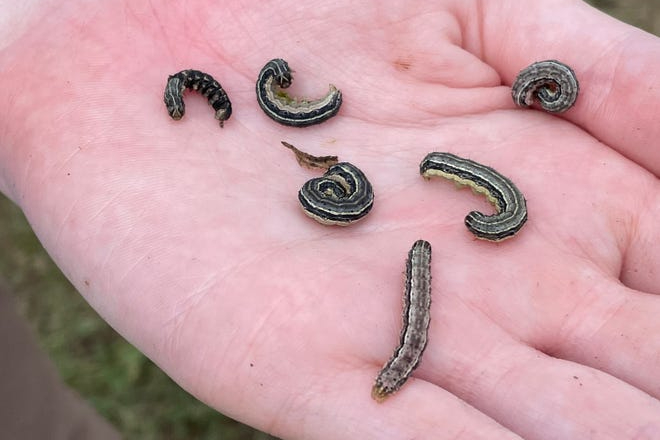
The Short Version
Fall armyworms do not spend the winter waiting in your lawn. They can't survive a normal Missouri winter. Each year, adult moths migrate north from the southern United States and eventually lay eggs here.
The timing and location of those moths are unpredictable. That's why we can see damaging armyworms in July one year, August another year and September the next — and why your lawn can have them while the lawn next door doesn't.
In other words, those armyworms didn't necessarily walk over from your neighbor's lawn. Their parents flew in.
Why Does My Lawn Have Armyworms But My Neighbor Doesn't?
This is probably the question we hear most.
Adult fall armyworm moths migrate north from areas where they can survive the winter. Weather systems and wind currents help carry those moths into our part of the country.
Think of their arrival more like a shotgun blast than a marching army.
The moths don't spread themselves evenly across Springfield and the surrounding area. One group may end up in your neighborhood while another lands several miles away. Egg-laying can be just as spotty.
That means one lawn can have a major infestation, the next two lawns can have absolutely nothing, and another lawn three houses down can have them again.
Unfortunately, your property isn't doing anything wrong. Sometimes your lawn simply drew the short straw in the Armyworm Lottery. An armyworm infestation does not mean there was something wrong with your lawn or that your normal lawn care program failed. Fertilizer and weed-control treatments do not provide protection from migrating armyworms.
Why Couldn't Classic Lawns Just Treat Before They Arrived?
We wish it were that simple.
The biggest challenge we've had with armyworms isn't controlling them once we find them. The biggest challenge is figuring out when they're going to arrive.
We've seen significant armyworm activity arrive at very different times from one year to the next:
July. Early August. Late August. And this year — September.
Insecticides don't create a season-long invisible force field around a lawn. Every product has a limited period of residual activity.
If we make a preventative treatment early in the summer but damaging populations don't arrive until much later, that earlier protection may no longer be adequate.
The alternative would be repeatedly treating lawns throughout the summer "just in case." We have never loved that answer either. We don't want to apply unnecessary products to the environment, and we don't want to charge customers for applications that may never be needed.
For years, reacting quickly when damaging populations began showing up in our area or were found in a lawn was the most reasonable approach
Unfortunately, these things have stopped behaving like an occasional freak occurrence.
Why Are Armyworms Suddenly Becoming an Every-Year Problem?
That's the frustrating part.
Cary has been in the lawn care business for more than three decades. For most of that time, armyworms were barely on the radar.
A massive armyworm outbreak hammered lawns around Springfield.
After decades without a significant problem, the armyworms returned.
They have become a recurring lawn problem almost every year.
When they first came back, we assumed it would be another odd one-year outbreak — something we'd talk about for another 20 years.
Apparently the armyworms had other plans.
They've turned it into a reunion tour, and nobody seems capable of cancelling the next show.
Heat + Drought + Armyworms = A Really Bad Combination
Armyworms feed on the green leaf tissue of the grass and can remove an incredible amount of it in a very short period of time.
If the lawn is otherwise healthy, well-watered and actively growing, it may recover surprisingly well once the armyworms are controlled.
The problem is that armyworm outbreaks often occur during the hottest and driest part of the season — when the lawn is already stressed.
A lawn that's been through near-100-degree temperatures and extended dry weather doesn't have the same ability to recover after thousands of caterpillars just ate most of its leaves.
That's the double whammy: the armyworms remove the leaf tissue, and the heat and drought make recovery much more difficult.
So What Is Classic Lawns Doing About It?
We're frustrated too.
We don't enjoy watching lawns we've worked on all season get turned into an armyworm buffet any more than our customers do.
Because armyworms now appear to be a recurring problem instead of a rare event, Classic Lawns is developing a dedicated Armyworm Protection Program for 2027.
Newer insecticide options are available that can provide a longer window of residual protection than many of the products traditionally used for armyworm control.
We are designing the program around approximately two to three strategically timed treatments during the armyworm season to greatly reduce the timing gamble we've dealt with in previous years.
Why multiple treatments?
- Armyworm arrival can vary by weeks or even months from year to year.
- No single treatment protects a lawn indefinitely.
- A broader protection window gives us a much better chance of having active control in place when moths arrive.
- The newer products cost more, but protecting a lawn is usually much less painful than rebuilding one after severe damage.
We still don't love applying more insecticide than necessary. That hasn't changed.
What has changed is the frequency of the problem. At some point, watching customers' lawns get damaged year after year becomes worse than taking a more proactive approach.
How Do I Know If I Have Armyworms?
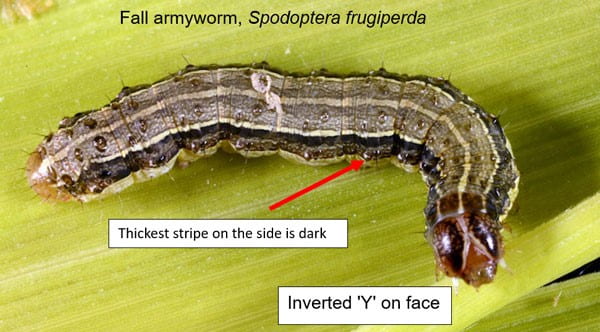
Look for:
- Long stripes running lengthwise down the body
- A distinct inverted Y-shaped marking on the head
- Young larvae that may appear light green or tan
- Older larvae that become darker green, brown or almost black
- Several caterpillars moving through the grass at the same time
- Birds suddenly spending an unusual amount of time feeding in one area of the lawn
Armyworms can be difficult to notice until their feeding damage begins showing up. When populations are high, the change can happen quickly.
What Does Armyworm Damage Look Like?
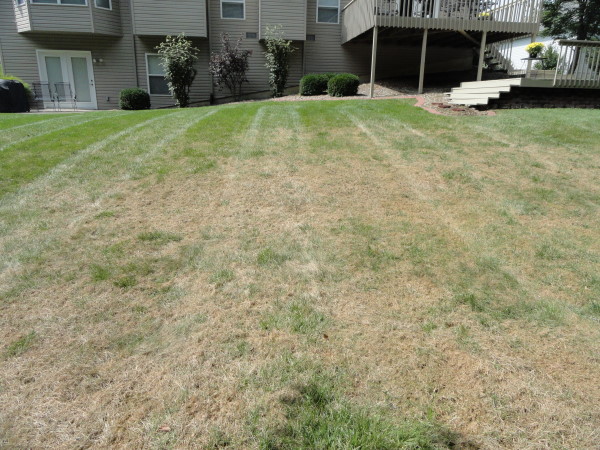
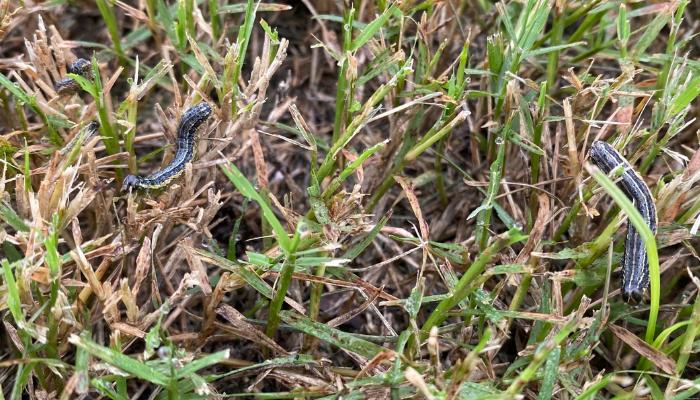
Armyworm damage often gets mistaken for drought or heat stress because the lawn can suddenly develop brown or straw-colored areas.
Look closer and you may see ragged, chewed grass blades and caterpillars down in the turf. Heavy populations can remove most of the green leaf tissue from large areas surprisingly quickly.
Will My Lawn Recover?
Often, yes.
Armyworms primarily eat the grass blades. If the crown of the plant is still healthy, the grass may produce new growth once the worms are controlled — especially if the lawn receives adequate water.
Recovery becomes much less predictable when severe feeding happens during extreme heat or drought, or when the infestation is allowed to continue for too long.
Some lawns recover with time, watering and normal care. Other lawns may require overseeding to repair badly damaged areas.
That's why catching armyworms early matters.
Think You Have Armyworms?
Don't wait several days to see what happens. If an area of your lawn suddenly starts turning brown, looks chewed or appears to be changing unusually fast, give us a call.
Call Classic Lawns: 417-812-5321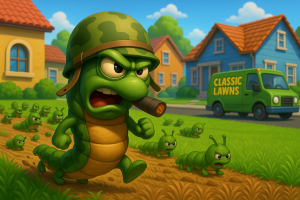
Want the More Entertaining Version?
Cary wrote about the infamous Armyworm Invasion of 1997, their long absence from our list of major lawn problems, and the reunion tour nobody asked for.
Read Cary's Armyworm Reunion Tour
Still fighting the Armyworm Reunion Tour,
Cary & the Classic Lawns Team
